Sustainable MICE, Green Mice

Sustainable MICE, Green Mice
Hello, this is Chris & Partners! 😊 If there's something that emerged as a hot issue due to COVID-19, what would it be? It's probably issues of the environment and sustainability. 🌱 Now the word ‘essential-environment era’ has appeared—meaning we must think of eco-friendliness as essential rather than optional—and many people, regardless of age or gender, have their interest focused on the environment. 🌳🌴 Due to COVID-19, contactless delivery/takeout culture surged, and as a result the use of disposable plastics increased; according to the Seoul Metropolitan Government, the daily average amount of waste collected in February of last year was 1,209 tons, about 15% higher than the previous year. As that's statistical data from over a year ago, perhaps even more waste has been discharged and collected? Feeling alerted by this, among the MZ generation a movement to voluntarily protect the environment is growing. Along with such trends, ESG management is also being demanded of companies. For sustainable development, they must consider even non-financial elements—eco-friendliness(Environment), socially responsible management(Social), governance improvement (Governance), and more. This is proof that the new consumers are a generation that scrutinizes not only quality and price but also meaning and a brand's authenticity. Lee Dong-won, CEO of COEX and chairman of the Korea Exhibition Industry Association, in an interview mentioned the MICE industry's eco-friendly issue.
“
ESG, which has emerged as a keyword in corporate management, will come to affect the MICE market too. As ESG has emerged as a matter of corporate survival, eco-friendliness will establish itself as an important issue in MICE too. MICE is essentially an industry at the opposite pole from eco-friendliness, but it must increase eco-friendly elements—raising the energy efficiency of related facilities such as hotels and convention centers, using recyclable exhibition booths at events, digitally replacing printed matter and banners, and the like.
”
In these days when the eco-friendly issue has begun to establish itself as an important point across all companies and industries, the MICE industry, too, will have to invest time and cost and pour continuous attention into it. Let's look at how eco-friendly practice is being carried out on-site at MICE through cases of domestic events. 🔍
GREEN MICE GREEN BUSAN
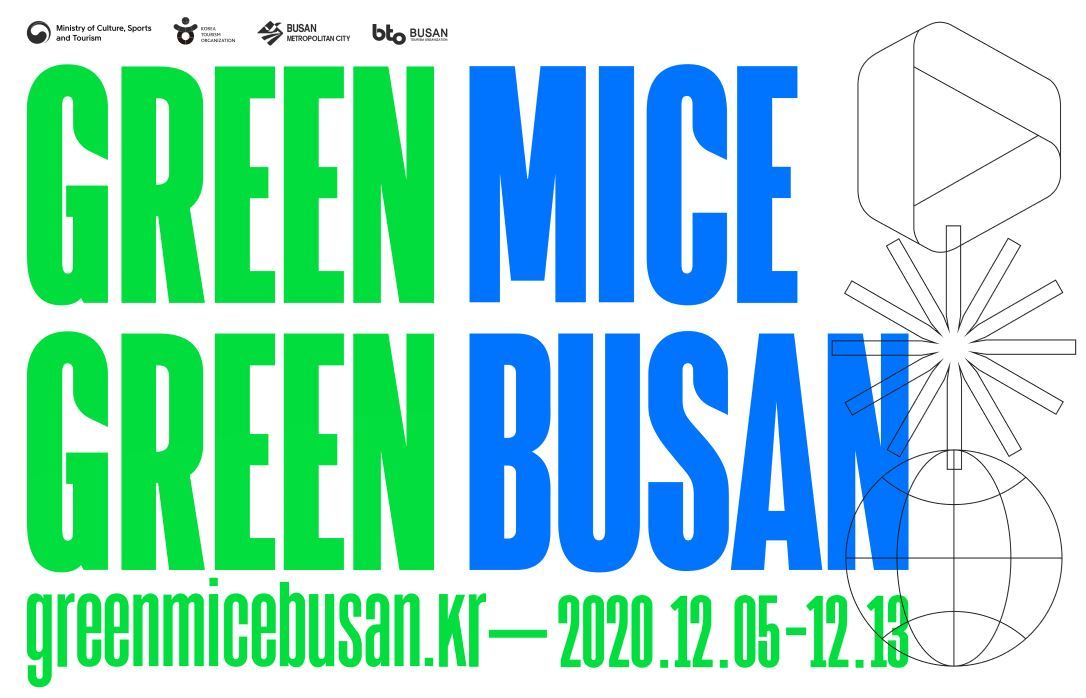
This past 2020, held in Busan, was Green MICE Green Busan. This event, hosted by Busan City and the Busan Tourism Organization, is an eco-friendly MICE campaign in which the local industry and citizens take part together for sustainable Busan MICE. Emphasizing a relationship that organically fuses three elements—‘regeneration’ that revives the environment, resource ‘circulation’ for the continuation of eco-friendliness, and the ‘participation’ of both the MICE industry and citizens—it made efforts to hold an eco-friendly event, such as making and installing exhibition booths from discarded wood before the event began. Through a prior eco-friendly campaign idea contest, among the 4 selected teams, the company ‘Manmanhan Nyeoseokdeul,’ chosen as No. 1 by participants' vote, devised a campaign to recognize the resource waste arising during the event and produce and use reusable wood products. Furthermore, it composed the venue using recyclable products—reusable equipment, scrap wood, discarded banners, and more—and planned a citizen-participatory eco-friendly MICE event. Also, it won a response by providing, by drawing, mufflers made from fabric produced by recycling waste PET bottles to citizens who joined the eco-friendly campaign. The ‘Green MICE Green Busan’ event, by activating ordinary citizens' participation and showing it striving at the forefront of eco-friendliness, fits the purpose of Green MICE and became a good example for the future of a sustainable MICE industry.
2019 Eco Fest in Seoul

Second, organized by the Environmental Foundation and Lotte Homeshopping, 2019 Eco Fest in Seoul also, with a problem awareness of excessive disposable use at existing event sites, informed participants in advance to bring reusable containers, and on-site it also provided rental services for cups, spoons, lunchboxes, trays, and more. Also, when products were bought at the festival, it set up a self-packing station so people could pack them using pre-donated eco-bags and paper bags, striving to minimize disposable packaging. On-site, banners and standees were produced in minimal quantities, and so they could be recycled after the event, Tyvek, corrugated cardboard, and mesh materials were used rather than disposable banners, it's said. The collected Tyvek-material banners were made into mats, and all collected materials were newly reused, it's said. Like this, 2019 Eco Fest in Seoul, which considered environmental issues not only in event content but in actual event operation, disclosed the amount of waste generated after the event: a total of 69 kg of waste was generated—the equivalent of each participant discharging 14 g of waste, it said. Compared with existing festivals, this is a level reduced by about 60–70% or more. The most discharged waste was paper, followed by general waste, food waste, plastic, vinyl, and cans, in that order, it's said. As it provides clear feedback even after the event, it seems it'll be a good model for a sustainable festival that considers the environment to the very end.
Webinars related to environmental issues
With interest in the environment and sustainability heightened due to COVID-19, webinars on various environmental-issue themes are being held at home and abroad.
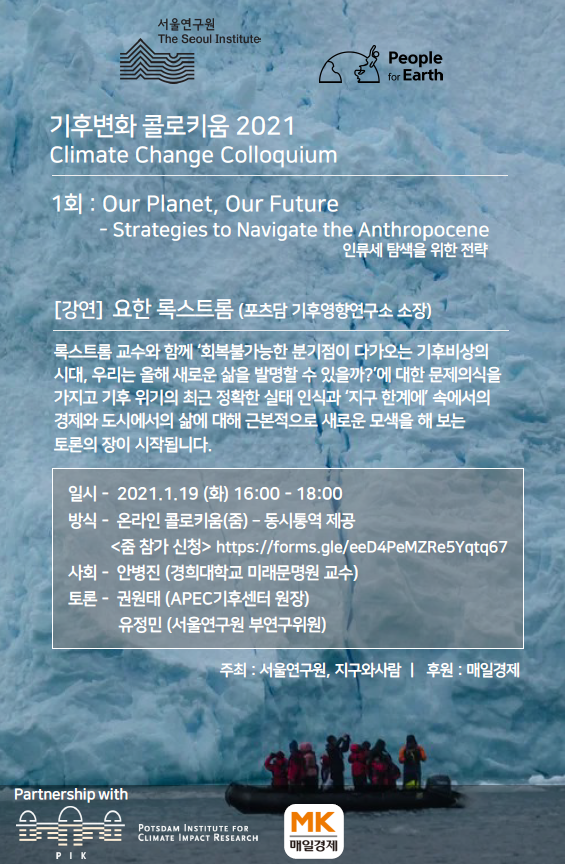
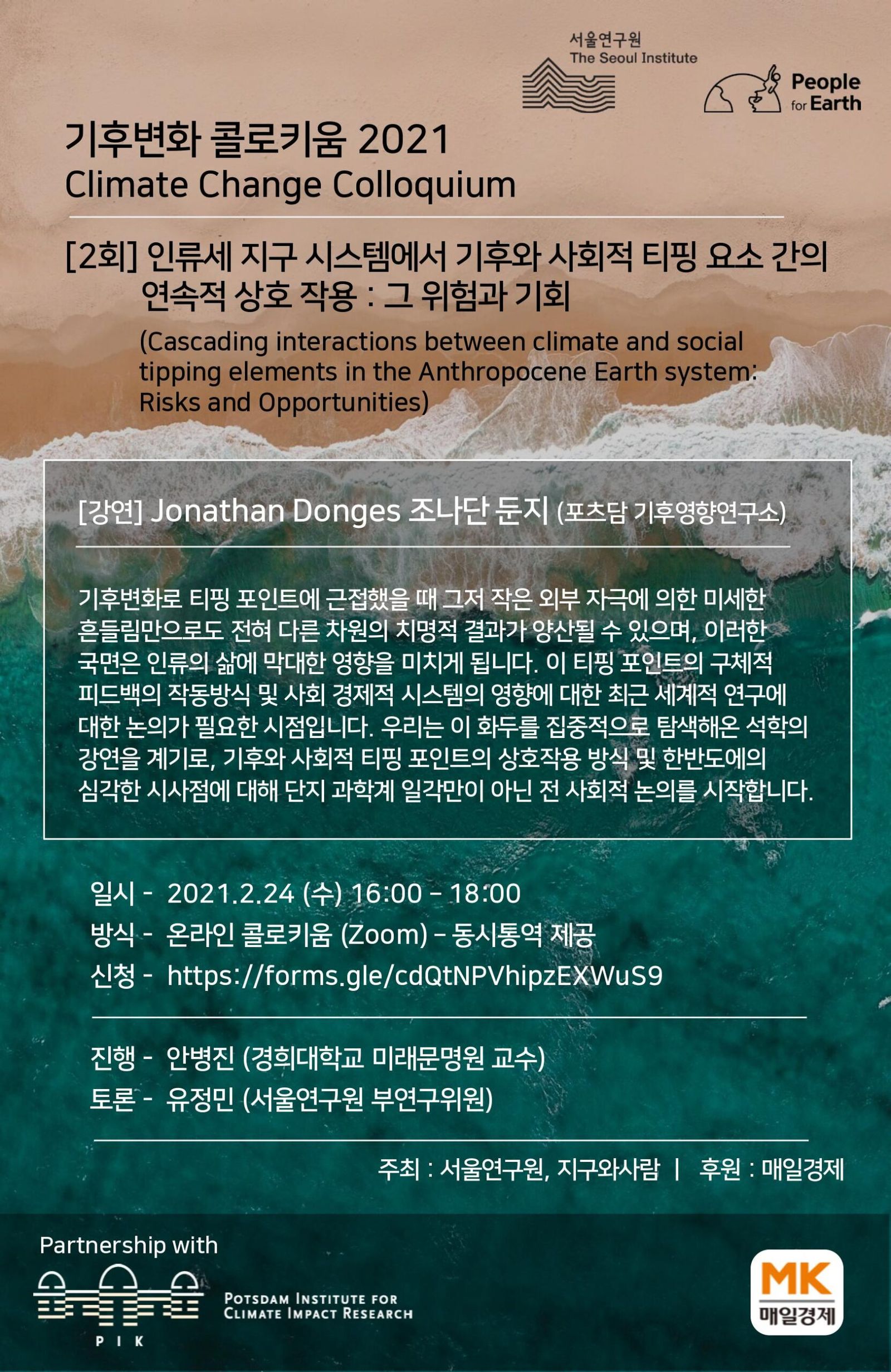
This past January and February, amid an anticipated era of global cooperation and competition to overcome the climate crisis, to find a direction, Chris & Partners took part in <Climate Change Colloquium 2021>, planned and co-hosted by The Seoul Institute and People for Earth. This colloquium, conducted in cooperation with Germany's Potsdam Institute for Climate Impact Research, which leads research in environmental-science fields like climate change and global warming, was held addressing the questions ‘Just how far to the cliff's edge have we come now?’, ‘Can we overcome this unprecedented-level crisis?’, and ‘How will we invent a new life for a bold transition?’
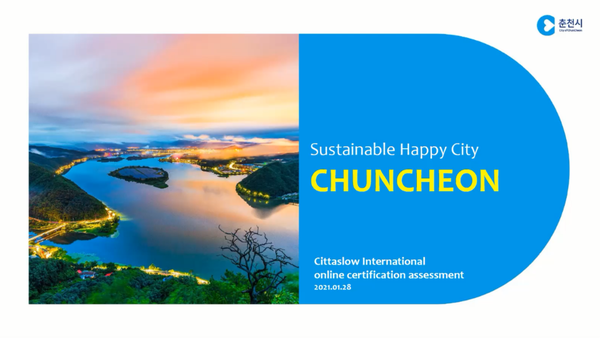
Also, Chris & Partners took part in the <Cittaslow International Online International Inspection> to push for Chuncheon City's admission to the international Cittaslow movement. Cittaslow is an international movement pursuing a ‘slow life’—returning to a free, old agrarian age while well protecting traditional culture and nature in pollution-free nature. As conditions for joining the Cittaslow movement, it must meet practice conditions such as eco-friendly energy development, restricting vehicle traffic and using bicycles, planting trees, and banishing fast food. Chuncheon City, through this online international inspection, received final approval to join the international Cittaslow movement this past March, it's said. 🎉 Through the foregoing cases, we looked into eco-friendly practice in MICE. We hope events that make participants think about environmental issues and practice them in daily life—just by taking part—grow more numerous, so that the perception of the MICE industry is also reconsidered! ☺ When you plan such a sustainable, eco event, partner with us, Chris & Partners! As a proven PCO that responds flexibly and aptly to clients' needs, we provide tailored services to deliver the best results from the planning stage to the finish—program and content planning, consulting, speaker booking, follow-up, and more. Prepare your event with Chris & Partners, a professional platform ready for various in-person/contactless meetings, hybrid/virtual events, and digital marketing. 🤝