Why ‘Event Safety’ Matters Most in the MICE Industry

Hello, this is Chris & Partners! 🤗
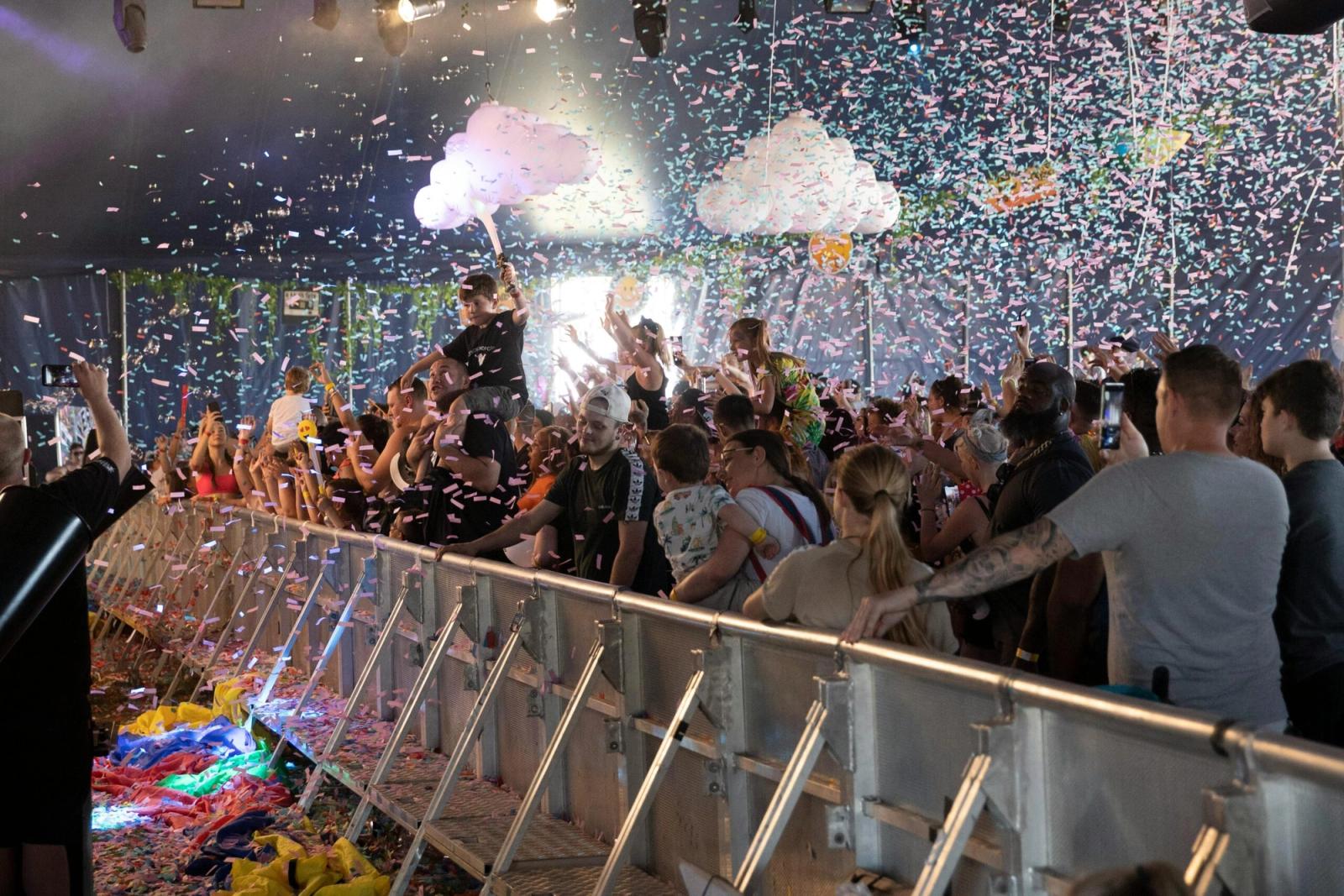
When planning an event, you tend to focus on content, speaker booking, and space design. But even if all of that is flawless, one shaky element can put the entire event at risk. That is 'Event Safety': event safety management. Today, we'll look at why Event Safety is becoming an ever more central keyword in the MICE industry, along with the reasons and practical directions for addressing it.
📈 How big has the global MICE market grown?
The MICE industry is growing fast. According to Fortune Business Insights, the global MICE market was about $1.226 trillion in 2025, and at an average annual growth rate of about 10.86% is projected to reach $3 trillion by 2034. The bigger the events and the more participants, the bigger the safety risks grow too. Now that large international meetings, exhibitions, and corporate incentive events are routine, Event Safety is not optional but essential.
🔍 What is Event Safety?
Event Safety (event safety management) means systematically managing the safety of participants and staff across the entire process—from the planning stage through operation and closing. It goes beyond simply assigning safety personnel to cover the following areas:
• Crowd management
• Fire, electrical, and structural safety review
• Emergency evacuation planning and drills
• Medical staffing and emergency response systems
• Venue access control and security management
• Risk identification and pre-inspection checklists
The U.S. Event Safety Alliance, through 'Event Safety Guide', sets out event-safety standards across 39 chapters covering emergency planning, crowd management, weather response, temporary-structure safety, and more.
⚠️ Why is Event Safety most important right now?
① Tighter domestic regulation — the change after the Itaewon disaster
The Itaewon crowd-crush disaster (the October 29 disaster) of October 2022 changed the paradigm of event safety management in Korea. It warned all of society how grave the consequences of a safety-management gap can be. The government has since sharply strengthened safety management for crowded events.
• The Ministry of the Interior and Safety issued a statutory ‘Local Festival Site Safety Management Manual (2024)’
• Amendment to the Enforcement Decree of the Framework Act on the Management of Disasters and Safety (effective Mar 26, 2024 and Oct 2, 2025)
• Events with a peak instantaneous crowd of 1,000+ — a safety-management plan is mandatory
• New local safety councils based on police–fire–municipal cooperation
• The Ministry of the Interior and Safety's ‘crowd-density monitoring system’ expanded to 30 regions nationwide
If you organize MICE events, you must accurately grasp and respond to these legal obligations.
② Larger events — increased risk
The larger an event grows, the more complex participant flow, crowd movement, and emergency evacuation routes become. According to Market Research Future, 70% of event planners cite health and safety as a top consideration in operations. Simply ‘assigning safety personnel’ can't handle the risks of large-scale events. The entire process—advance risk assessment, emergency-response scenarios, and staff training—must be systematized.
③ Legal liability and brand trust
If a safety incident occurs during an event, legal liability falls on the organizer. Numerous laws relate to MICE events—the Serious Accidents Punishment Act, the Public Performance Act, the Occupational Safety and Health Act—with criteria that vary by event type. For corporate events and international meetings especially, a single incident can do long-term damage to the host company's image and trust. Event Safety is both risk management and a brand-protection strategy.
✅ Where should Event Safety begin?
Event safety management must begin at the planning stage. Check the five key elements below.
1️⃣ Advance risk assessment Before the event, analyze key risk factors—venue, headcount, structures, electricity, weather. According to the UK Health and Safety Executive (HSE), you must check in advance the venue's characteristics, expected crowd size, bottleneck points, and whether emergency exits are secured.
2️⃣ Crowd-management plan Design entry/exit flow, waiting areas, and emergency exits in advance. Per the U.S. NFPA 101 standard, a minimum of 0.46㎡ per person is recommended (for general standing-room areas). Advanced CCTV, AI crowd-analysis tools, and real-time alert systems can detect crowding risk early.
3️⃣ Building an emergency-response system Prepare response procedures by scenario—fire, medical emergencies, structural collapse, and so on. Advance coordination with police, fire, and medical teams and an emergency contact network are essential. For large events, you can use the Ministry of the Interior and Safety's ‘Crowd-Crush Safety Management Guidelines (2024)’ as a benchmark.
4️⃣ Staff training and role assignment Train all on-site staff on emergency response, evacuation routes, and communication channels. Safety isn't the job of a small dedicated team alone. Every staff member on site must know the basic response.
5️⃣ Use of inspection checklists Conduct safety checks systematically across before, during, and after the event. The Korea Tourism Organization's ‘MICE Safety Management Manual’ provides checklists by event type—meetings, exhibitions, incentives, and more.
🌍 Global Event Safety trends
In 2025–2026, the global MICE industry sees safety not as a mere obligation but as a ‘competitive edge.’
• 🤖 Adoption of AI crowd-analysis technology — predicting density in real time and sending alerts
• ♿ The EU Accessibility Act (EAA 2025) takes effect — fines of up to €1 million for failing to meet disability-accessibility standards
• 📋 Linked to ESG management — more companies adopt safety management as a key indicator of social responsibility (Social)
• 🏥 Wellness design — introducing medical stations, quiet spaces, and mental-health support within venues
• 🔗 Clearer organizer responsibility — growing discussion of stronger duties for private organizers to secure their own safety personnel
The MICE Trend Report 2025–2026 (EVINTRA) analyzes that the shift toward ‘strategic events’ is accelerating, emphasizing that safety and trust are becoming key criteria in event selection.
💬 In closing
Event Safety isn't about responding ‘when a problem arises.’ Only by weaving safety into the design from the planning stage does an event become truly complete.
From the very first step of event planning, Chris & Partners Event Safety will be a partner that raises the quality of your event by considering it together. 🤝
📚 Sources
• Event Safety Alliance – Standards and Guidance – https://eventsafetyalliance.org/standards-guidance