‘Economics Is Hard?’ Just Knowing the Terms Gets You Halfway There.

‘Economics Is Hard?’ Just Knowing the Terms Gets You Halfway There.
Hello, this is Chris & Partners.😊 What comes to mind when you think of the economy? It's an essential area to know, but for most it seems to feel difficult and distant. So today, to take it step by step from the very first step, we'll look into basic economic terms and new economic buzzwords.💰
The first step in economics: basic economic terms

These days it's common to find economic issues in most of the news. But even after hearing many economic terms in the news or articles, there are often cases where you don't quite understand what they mean. To prepare for such cases, let's look into basic economic terms worth knowing.
Basic economic terms
1. GDP (Gross Domestic Product)
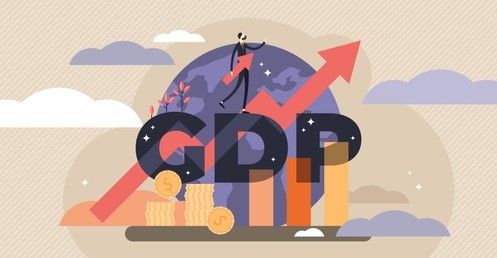
This is probably a word you've often encountered via TV or newspapers. GDP is the abbreviation for Gross Domestic Product. Gross domestic product means the sum of the market value of goods and services produced in a country over a certain period. Usually GDP changes on a one-year basis, and this GDP is used as an indicator showing a nation's capacity. Until the 1980s, national income (GNP) was thought of as a country's economic scale, but currently GDP is used to measure a nation's capacity.
2. CPI (Consumer Price Index)
CPI means the Consumer Price Index. It is an index measured by taking the average price of the goods and services that individual households in a country buy to consume. Looking at the rate of change in the consumer price index lets you tell at a glance how citizens currently feel about prices and lets you measure inflation. Because it's an important indicator that plainly shows citizens' lives, it can be seen as an economic statistic the nation treats as seriously as the census.
3. Interest rate
The interest rate refers to the price of money. To look a bit more closely, it means that just as a price exists when buying and selling goods in a market, a price is also formed in the financial market where money is lent and received. Like this, it'd be good to understand it as the rate of interest paid as compensation for lending funds in the financial market where funds are traded.
4. Inflation
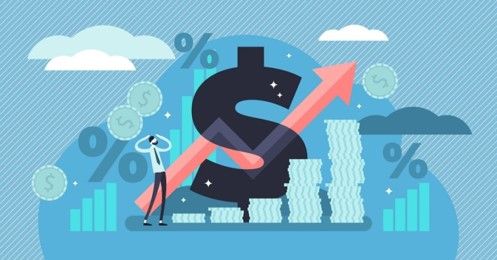
Inflation is a word that, in economics, means a rise in prices. A rise in prices means that the prices of most of a country's goods and services rise continuously. When inflation occurs, that country's currency value falls. For example, if you have to pay 10,000 won to buy one small candy, it means the value of 10,000 won has dropped so low that it can buy only one candy. For this reason, when inflation occurs in a country, the economy usually declines due to the price rise.
5. Deflation
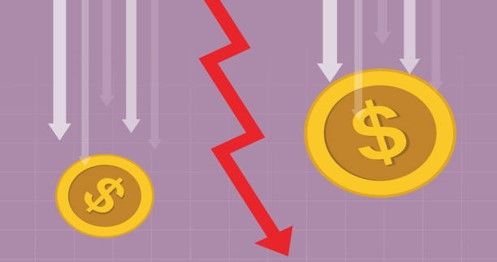
Deflation is an economic term with the exact opposite concept of inflation. Unlike inflation's price rise, deflation means a continuous fall in the prices of goods and services in a country's economy. At a glance, since it's the opposite of inflation it might seem good, but a fall in the price of goods basically means consumption isn't happening. When consumption doesn't happen, companies' profits fall and they halt hiring, and when hiring is halted, consumer sentiment shrinks further and the domestic economy doesn't run properly.
6. FTA (Free Trade Agreement)

FTA is the abbreviation for Free Trade Agreement. A free trade agreement is an agreement in which countries that have agreed with each other grant many benefits to promote each other's trade. Trade between nations is mostly controlled by strict laws to protect one's own country. Easing such barriers and concluding agreements between two countries or regions widens the mutual trade market, so there's the advantage of promoting the export and investment of goods. However, if there's a vast difference in trade competitiveness between the agreeing countries, the country with lower trade competitiveness can suffer great harm.
Walking in step with the economic flow: new economic buzzwords
Economic trends, too, can be seen changing fast according to the era's traits and tendencies. Accordingly, new economic buzzwords arise. Since there are many buzzwords arising to reflect the times, once you know them it's easy to grasp the current era's economic situation at a glance, so economic beginners too can look at them with interest. Let's look at the new economic buzzwords that are fun and useful once you know them.
1. Qconomy
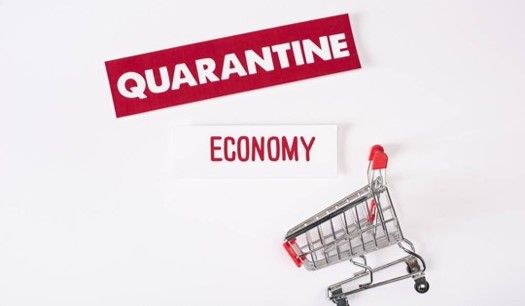
Qconomy is a buzzword combining ‘quarantine’ and ‘economy,’ meaning the quarantine economy. It's a consumption form chosen as people who self-quarantined—blocking outings and outside contact due to COVID-19—lived a stay-at-home life. Because Qconomy means consumption shrinkage due to an ‘infectious disease,’ the most prominent feature is that, as anxiety spreads with people reluctant to be together, even government subsidies don't lead to consumption, and gradually consumption outside the home is paralyzed. Within the stay-at-home life, delivery platforms and online shopping—Baedal Minjok, Coupang Eats, Coupang, E-mart dawn delivery, and the like—are rapidly gaining popularity, and online movie-content services like Netflix and Watcha are also showing peak growth. Besides these, interior and furniture business, electronics, premium skincare cosmetics, books, and the like can be seen as the Qconomy items that grew most after COVID.
2. Taste consumption
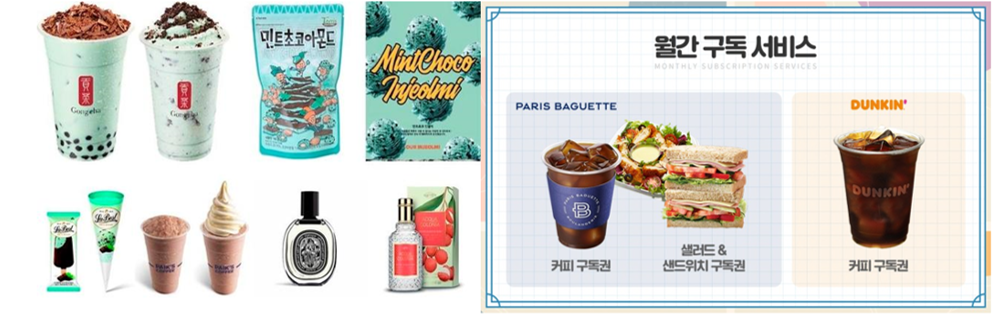
What's leading consumption trends recently is the MZ generation consumers' tastes, and taste consumption refers to their tendency to buy experiential menu items matching their tastes. Because the MZ generation is one that pursues its own happiness and values individuality rather than others' gaze and demands, it pursues maximizing self-satisfaction not only with products and food but also when consuming content. For example, you can see that as mint chocolate trended through social media and the buzzword ‘Min-cho-dan’ (mint-choco squad) arose, various mint-choco-related products appeared—mint choco milk, Hershey's mint choco, and more. Also, as the MZ generation—valuing experience over ownership—rose as the mainstream leading consumption trends, the subscription-economy model expanded across whole industries, including food and exercise. The method of paying a regular subscription fee to use a product or service for a set period was, until a few years ago, limited to content areas like music and video, but in line with the MZ generation's traits, Dunkin' Donuts and Paris Baguette, to provide a high-added-value experience at a relatively burden-free price, offer coffee subscriptions and salad & sandwich subscriptions.
3. Various consumer types (ambisumer, greensumer, socialsumer)
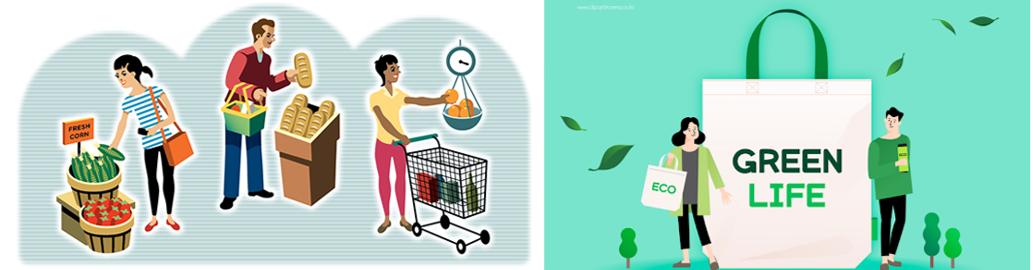
Ambisumer (ambivalent + consumer) means a customer who consumes with a double standard depending on specific conditions. Having ambivalence doesn't mean it carries a negative meaning. Based on the ranking of one's values, it means a form of open consumption for high-priority things and closed consumption for things without priority. Because values and priorities differ for each person, you can see various ambisumers. For example, there are people who save on food costs to buy expensive electronics, people who live in a one-room flat but insist on a foreign car, and people who cut spending on clothes and cosmetics to invest in food. Greensumer (green + consumer) — people who selectively consume environmental-protection-related products are called greensumers. As interest in the environment grows, greensumers are on the rise. They tend to check whether a product contains harmful substances, whether it's over-packaged, whether it's recyclable, and whether eco-friendly elements are reflected. Greensumers can gain not only the product's own utility but also the satisfaction of contributing to environmental protection. Socialsumer (social + consumer) — considering society's ethical aspects and the benefits society can gain, there are socialsumers, the consumer group that decides consumption accordingly. For them, the key points in deciding a purchase are not just the product itself, but what social value the product holds, what image the company has in society, and what value it provides.
4. FIVVE

‘FIVVE’ stands for Fun, Inconsistency, Value, Virus revenge (revenge consumption), and Expression. It can be seen as a consumption form newly appearing in the MZ generation. The MZ generation pursues enjoyment through consumption, knows how to express itself, and tends to consume on things it judges to be of value. Also, because the form of consumption changes according to one's own taste and value judgment, it shows inconsistency in consumption. ‘FIVVE,’ the consumption tendency newly appearing in this generation, implies the following meanings. 📌Fun A picture of enjoyment leading to a purchase—meaning that even if a product is unneeded, if it brings enjoyment, one buys it without much hesitation. 📌Inconsistency Meaning a consumer's consumption form is hard to judge and predict by the same standard. (For instance, even when the ‘MZ generation’ buys a sandwich, they choose ingredients to their taste and enjoy varied flavors.) 📌Value Meaning that even if a product's price is expensive, they buy it if they judge it valuable, but conversely, even if a product's price is cheap, they don't buy it if they judge it has no value. 📌Virus Revenge Consumption A picture of trying to escape oppression or deprivation through consumption—meaning that as COVID-19 spread and going out became hard and the home expanded beyond a mere living space into a space for various activities, people buy more goods than needed. 📌 Expression Meaning expressing the values one prizes through consumption. (For example, someone who considers animal welfare important consumes products like faux-leather goods or ethically produced down (RDS) padding.)
A smart way of looking at the world

Among the basic terms and buzzwords introduced today, were there many terms you already knew? These days, more than ever, we feel the importance of money management. Accordingly, stocks, buying a home, one-person business and the like have become keywords of interest to most people. Also, younger people's consumption is increasing and interest in money management is rising. In a fast-changing world, it'd be good to keep an ongoing interest in what trends and buzzwords will arise going forward.
Are you planning a hybrid event? Chris & Partners—partner with us! As a proven PCO that responds flexibly and aptly to clients' needs, we provide tailored services to deliver the best results from the planning stage to the finish—program and content planning, consulting, speaker booking, follow-up, and more.